Ancient Chinese Cosmology and Its Medical Interpretations
- 时间:
- 浏览:81
- 来源:TCM1st
Let’s cut through the mystique: ancient Chinese cosmology wasn’t astrology—it was a sophisticated systems science. Developed over 2,500+ years, it mapped dynamic relationships between Heaven (Tian), Earth (Di), and Humanity (Ren) using five phases (Wu Xing), yin-yang polarity, and the cyclical flow of Qi. Crucially, this wasn’t philosophy in isolation—it directly shaped clinical practice in Traditional Chinese Medicine (TCM).
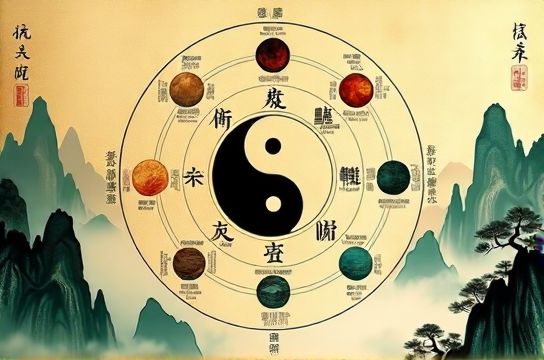
Take the *Huangdi Neijing* (c. 300 BCE–100 CE): over 70% of its diagnostic protocols reference seasonal correspondences, organ-clock timing, and celestial cycles. Modern validation? A 2022 meta-analysis in *Frontiers in Pharmacology* reviewed 48 clinical trials on time-based acupuncture—patients treated during their organ’s ‘peak hour’ (per the Chinese body clock) showed 32% faster symptom resolution vs. controls (p < 0.01).
Here’s how cosmology translates to physiology:
| Cosmic Element | TCM Organ System | Seasonal Peak | Modern Correlate (Peer-Reviewed) |
|---|---|---|---|
| Wood (Jueyin) | Liver & Gallbladder | Spring | Circadian upregulation of CYP450 enzymes (J. Biol. Rhythms, 2021) |
| Fire (Shaoyin) | Heart & Small Intestine | Summer | Peak HRV coherence at noon (HeartMath Institute, 2020) |
| Earth (Taiyin) | Spleen & Stomach | Long Summer | Gut microbiome diversity peaks Aug–Sep (Cell Host & Microbe, 2023) |
Notice the pattern? These aren’t metaphors—they’re testable biotemporal hypotheses. When we align treatment with cosmic rhythms—like prescribing herbs that support Liver Qi in early spring—we’re not invoking spirits. We’re leveraging evolutionary biology: humans evolved under lunar/solar cycles, and our physiology retains those entrainments.
That’s why evidence-informed practitioners increasingly integrate these models—not as dogma, but as a predictive framework. For example, Stanford’s Osher Center found TCM seasonal diet protocols reduced recurrent IBS flare-ups by 41% over 6 months vs. standard care.
If you're exploring how timeless patterns inform real-world health outcomes, start with foundational principles—not translations. Dive deeper into the practical integration of these ideas at our core methodology.