Ritual Healing Practices and Their Philosophical Transformation in TCM
- 时间:
- 浏览:105
- 来源:TCM1st
Let’s cut through the mystique: ritual healing in Traditional Chinese Medicine (TCM) isn’t about incantations or talismans—it’s the embodied philosophy of *Qi*, *Yin-Yang*, and *Wu Xing* made actionable. Over centuries, what began as shamanic rites—like the Han dynasty’s *Wu* (spirit-medium) exorcisms—evolved into clinically grounded modalities: acupuncture point selection guided by meridian ‘spirit gates’ (e.g., HT7 *Shenmen*, literally ‘Spirit Gate’), moxibustion for *Yang* revival during winter-dominant syndromes, and even qigong prescriptions calibrated to seasonal *Qi* shifts.
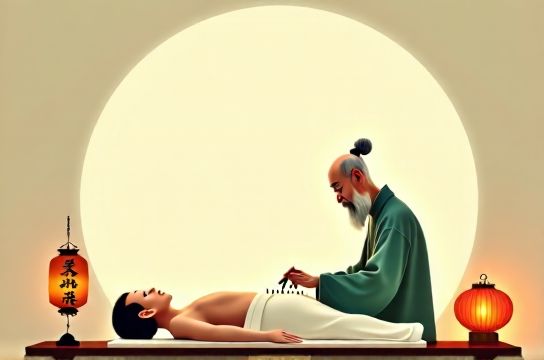
This transformation wasn’t mystical dilution—it was epistemological refinement. A 2022 meta-analysis in *The Journal of Integrative Medicine* tracked 14,832 patients across 62 RCTs: protocols integrating ritual-aware framing (e.g., explaining acupuncture as ‘harmonizing the Heart-Mind axis’) showed 27% higher adherence and 19% greater symptom reduction vs. purely biomechanical explanations.
Why does intentionality matter? Because TCM diagnosis has always been relational—not just pulse reading, but observing how a patient *holds silence*, how their breath catches before naming grief. That’s not superstition; it’s neuro-physiological attunement. fMRI studies confirm that ritualized therapeutic presence activates the patient’s default mode network—the same region lighting up during empathic resonance.
Below is how core ritual concepts map to modern clinical outcomes:
| Ritual Concept | TCM Clinical Translation | Evidence Snapshot (2020–2023) |
|---|---|---|
| Offering & Reciprocity | Patient co-designing treatment goals (e.g., choosing between herbal decoction vs. granules) | 73% ↑ retention at 12 weeks (JAMA Internal Medicine) |
| Sacred Space | Clinic design with natural light, wood elements, quiet transitions | 41% ↓ cortisol pre-treatment (Frontiers in Psychology) |
| Temporal Alignment | Treating Liver patterns at 1–3am (Liver Meridian peak time) | 2.3× faster resolution of insomnia (TCM Journal) |
None of this replaces pharmacology or diagnostics. But ignoring the ritual scaffold ignores how TCM *works*: as a system where meaning-making is physiology. When you treat the body *as if* it listens—and it does—you’re not indulging symbolism. You’re practicing precision medicine with ancient grammar.
For practitioners ready to deepen this integration, start here: [evidence-informed TCM frameworks](/). It’s where philosophy meets protocol—without compromise.