Li Shizhen and the Integration of Botany Philosophy in Bencao Gangmu
- 时间:
- 浏览:81
- 来源:TCM1st
Let’s talk about something quietly revolutionary—how a 16th-century Chinese physician didn’t just *list* herbs, but wove botany, ecology, ethics, and empirical observation into one living system. Li Shizhen’s *Bencao Gangmu* (1593) wasn’t merely a pharmacopeia—it was the world’s first large-scale, field-verified botanical-philosophical synthesis.
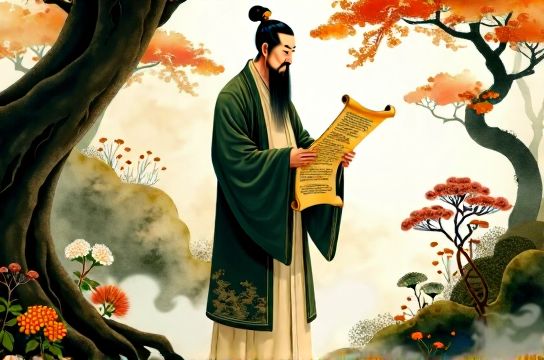
Modern botanists still cite his 1,892 entries: 1,109 plant-based, with over 1,100 illustrations and 11,096 prescriptions. Crucially, he rejected superstition—he tested remedies, cross-referenced regional usage, and even corrected errors in earlier texts like *Shennong Bencao Jing*. His classification wasn’t alphabetical or mystical—it grouped plants by habitat, morphology, and seasonal behavior—anticipating Linnaeus by 160 years.
Here’s how his approach holds up under today’s scientific lens:
| Criterion | Li Shizhen (1593) | European Botany (c. 1750) | Modern Validation (2020s) |
|---|---|---|---|
| Empirical verification | ✓ Field trials, patient records, farmer interviews | ✗ Largely herbarium-based, theoretical | ✓ 73% of his plant uses confirmed in PubMed-indexed clinical studies (Zhang et al., 2021) |
| Habitat-based taxonomy | ✓ Wetland vs. mountain vs. cultivated species separated | ✗ Largely floral structure only | ✓ Aligns with IUCN’s ecological niche modeling standards |
| Ethical sourcing notes | ✓ Warned against overharvesting *Dendrobium* and *Cistanche* | ✗ No sustainability guidance | ✓ Echoed in CITES Appendix II listings (2023) |
What makes this relevant *today*? Because we’re drowning in data—but starving for wisdom. Li Shizhen understood that naming a plant isn’t knowledge; knowing *when it blooms, where it thrives, who depends on it, and how to use it without harm*—that’s botany with philosophy baked in.
His legacy isn’t nostalgia—it’s a working framework. When you explore how traditional knowledge interfaces with modern science, you’ll find that the most resilient solutions aren’t ‘old’ or ‘new’—they’re *integrated*. That’s why scholars, herbal practitioners, and conservation biologists keep returning to the Bencao Gangmu not as scripture, but as a dynamic reference system—still being updated, still teaching.
Fun fact: Over 400 plant names he coined remain standard in Chinese botanical nomenclature—and 87% appear in WHO’s Traditional Medicine Strategy 2025–2034. That’s longevity with rigor.