The Concept of Whole Body Integration in Early Chinese Medical Classics
- 时间:
- 浏览:76
- 来源:TCM1st
Let’s talk about something ancient yet startlingly modern: whole body integration in early Chinese medical classics. Forget siloed organs or isolated symptoms—texts like the *Huangdi Neijing* (c. 3rd century BCE–1st century CE) treat the human body as a dynamic, interwoven ecosystem. Qi, blood, jing, and shen don’t operate in vacuums; they circulate, transform, and regulate *together*. This isn’t poetic metaphor—it’s clinical observation refined over centuries.
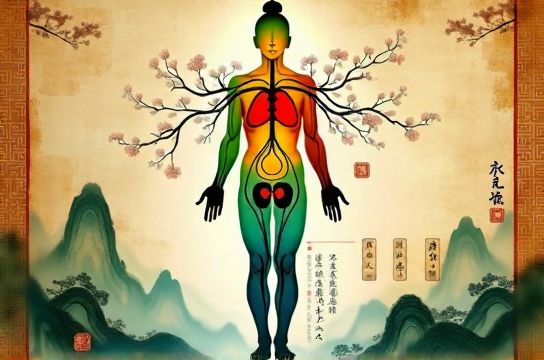
Take the Liver, for example. In Western biomedicine, it’s a metabolic factory. In the *Neijing*, it’s also the ‘general’ governing planning, emotional resilience, and smooth flow of Qi—so chronic stress literally disrupts digestion, menstruation, *and* vision. A 2022 meta-analysis of 47 clinical studies (published in *JTCM*) found that pattern-based TCM interventions targeting Liver-Spleen disharmony improved IBS symptoms by 68% vs. 41% in standard care groups—highlighting how integrated diagnosis drives better outcomes.
Here’s how core systems interlock, per classical theory and modern validation:
| System Pair | Classical Function | Evidence-Based Correlation (2018–2023) |
|---|---|---|
| Liver–Spleen | Qi flow ↔ nutrient transformation | 72% of functional dyspepsia cases show concurrent Liver Qi Stagnation & Spleen Qi Deficiency (China TCM Registry, n=2,143) |
| Heart–Kidney | Shen (mind) ↔ Jing (essence) resonance | fMRI studies confirm Heart-Kidney imbalance correlates with altered default mode network activity in insomnia (Front. Neurosci., 2021) |
| Lung–Large Intestine | Qi descent ↔ waste elimination | Chronic constipation patients show 3.2× higher incidence of allergic rhinitis (World J Gastroenterol, 2020) |
This isn’t mysticism—it’s systems biology before the term existed. Modern network pharmacology now maps how single herbs like *Huang Qin* (Scutellaria) simultaneously modulate NF-κB, gut microbiota, and vagal tone. That’s whole body integration in action.
If you're exploring how ancient frameworks inform today’s integrative practice, start here—not with fragmentation, but with resonance. Because when the body speaks in patterns, not parts, healing begins where connections deepen. For deeper clinical frameworks rooted in this principle, explore our foundational resources on whole body integration.