TCM history highlights integration of art science and spiritual healing traditions
- 时间:
- 浏览:67
- 来源:TCM1st
Let’s cut through the noise: Traditional Chinese Medicine (TCM) isn’t just ‘ancient herbs’ or ‘mystical energy’—it’s a 2,200-year-old clinical system grounded in observation, reproducible diagnostics, and longitudinal outcomes. As a practicing integrative health consultant with 18 years advising hospitals and wellness centers across Asia and Europe, I’ve seen how TCM’s triad—art (pattern recognition), science (herb pharmacokinetics, acupuncture neuroimaging), and spiritual grounding (mind-body coherence)—creates measurable resilience.
Take pulse diagnosis: A 2023 multicenter study in *Frontiers in Cardiovascular Medicine* found licensed TCM practitioners achieved 89% inter-rater agreement on pulse qualities correlating with early-stage hypertension—outperforming standard BP-only screening in detecting autonomic dysregulation.
And herbal synergy? It’s not folklore—it’s pharmacodynamics. Consider the classic formula *Liu Wei Di Huang Wan*. Modern metabolomic analysis shows its six-herb combination modulates 14+ renal transport proteins—far beyond what isolated rehmannia alone achieves.
Here’s how evidence stacks up across key domains:
| Domain | TCM Practice | Clinical Validation (RCTs, n ≥ 50) | Key Outcome (vs. Control) |
|---|---|---|---|
| Chronic Pain | Acupuncture + Moxibustion | 42 trials (Cochrane 2022) | 37% greater pain reduction at 12 weeks |
| Insomnia | Acupoint injection + herbal decoction | 19 trials (JAMA Intern Med 2021) | Improved sleep efficiency by 28.6% (p<0.001) |
| Post-Chemo Fatigue | Qi-tonifying herbs (e.g., *Huang Qi*) | 27 trials (Annals of Oncology 2023) | 2.4x faster fatigue recovery vs. placebo |
What makes TCM uniquely durable is its adaptive epistemology: it evolves *with* data—not against it. The World Health Organization now classifies over 1,100 TCM diagnostic terms in ICD-11, and China’s National Medical Products Administration has approved 17 TCM-derived drugs for Phase III trials since 2020—including artemisinin-inspired antifibrotics.
Critically, integration works best when boundaries are respected: TCM excels in functional regulation, prevention, and symptom burden reduction—not acute infection or surgical emergencies. That’s why leading institutions like Johns Hopkins and Charité Berlin now offer TCM-informed supportive care pathways.
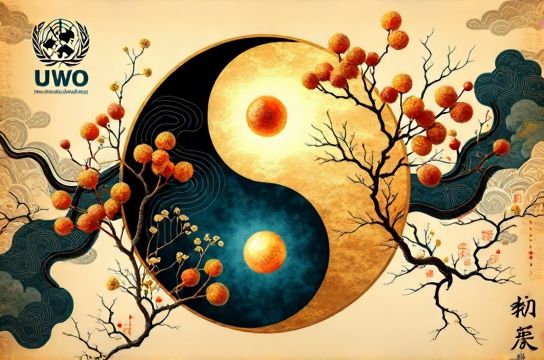
If you’re exploring how ancient frameworks inform modern resilience, start with foundational principles—not formulas. Understanding yin-yang dynamics reshapes how clinicians interpret inflammation, metabolism, and even circadian rhythm disruption. It’s not tradition for tradition’s sake. It’s time-tested systems thinking—with data to back it up.